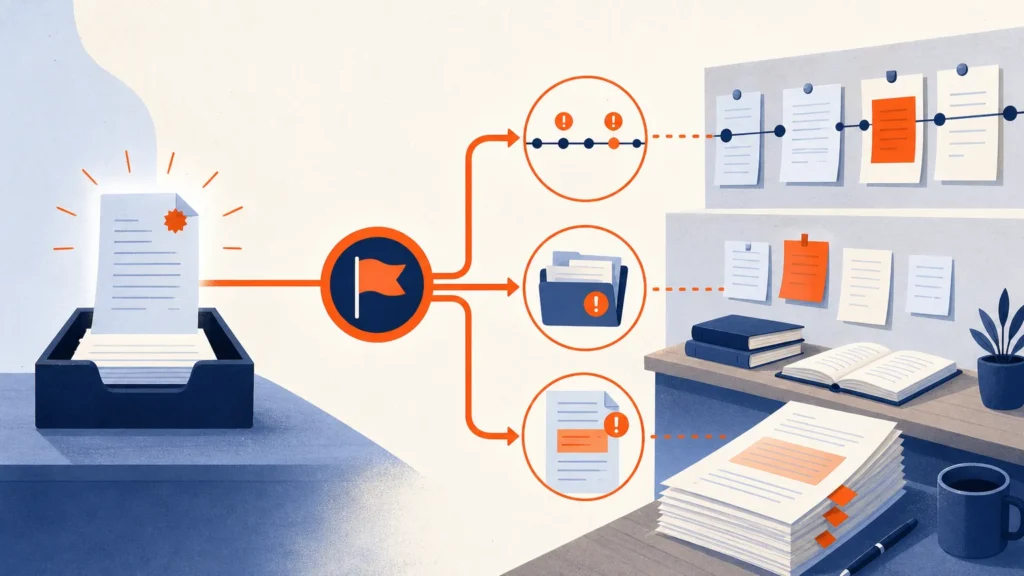
Build a supervised assistant that prepares the morning brief, meeting prep, follow-up drafts, deadline warnings and weekly review. Every item has a source, and nothing goes out until a person approves it.
What you will be able to do
- Standing instructions your attorney signs off: Write the agent's role, priorities, VIP clients and courts, permitted sources, never-read list, approval rules and reporting format for a legal practice. Then get version 1.0 signed off by the supervising attorney and loaded into your tool.
- A platform your firm approves and you can actually get: Compare Claude Duet, OpenAI dots, Claude or ChatGPT scheduled tasks, Microsoft 365 Copilot and Gemini in Workspace by region, plan and firm policy. Set up one main tool and one fallback with the least access that works.
- A weekday morning brief with a deadline sweep: Schedule a brief that ranks what needs the attorney today, warns at T-30, T-14, T-7 and T-2 with every date marked unverified until docketing confirms it, tags each item with its source, and lists what it could not check.
- Meeting prep and follow-ups that wait for approval: Turn client and internal meetings into prep notes, recap drafts, proposed tracker rows and proposed advice-log entries. An attorney reviews all of it before anything goes out.
- A decision and advice log and a delegation tracker: Track advice given, decisions made, and research and drafting assignments. Finished work comes with its citations listed so an attorney can check each one. Only a person can mark an entry confirmed or verified.
- Guardrails, and a two-week rollout you can judge: Run a prompt-injection drill and a permission audit, and treat opposing parties' documents as information rather than instructions. Then run a two-week rollout with a weekly review and a corrections log, and decide in writing which routines to keep, widen or cut.
Taught at learn.m-a-s-t-e-r.ai: lessons that adapt to your level, an AI tutor you can ask anything, quizzes and flashcards, and a certificate when you finish.