Build and supervise agents in OpenAI Dots or Claude Duet that keep assets, credits, listening notes and campaign drafts aligned between your reviews, and bring back what's missing.
What you will be able to do
- Give an agent a role it can't misread: Name a role such as Release Desk and write its brief: the goal, approved connections, the report you agree on, where a person reviews, and how it is paused or retired. Choose OpenAI Dots or Claude Duet, and a single run or a continuing brief, and give a reason for each choice.
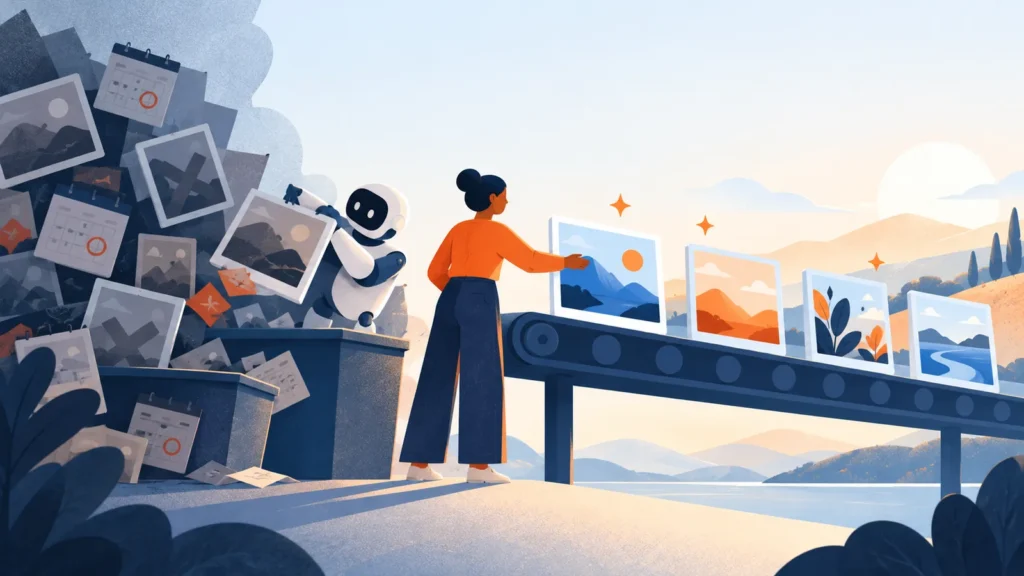
- Take in the overnight file drop without losing the approved master: Build an intake agent that registers new files under one release ID. It logs a new master as a new version, leaves the approved one alone, sets the duplicate artwork aside, and asks for the missing instrumental a set number of times before it escalates.
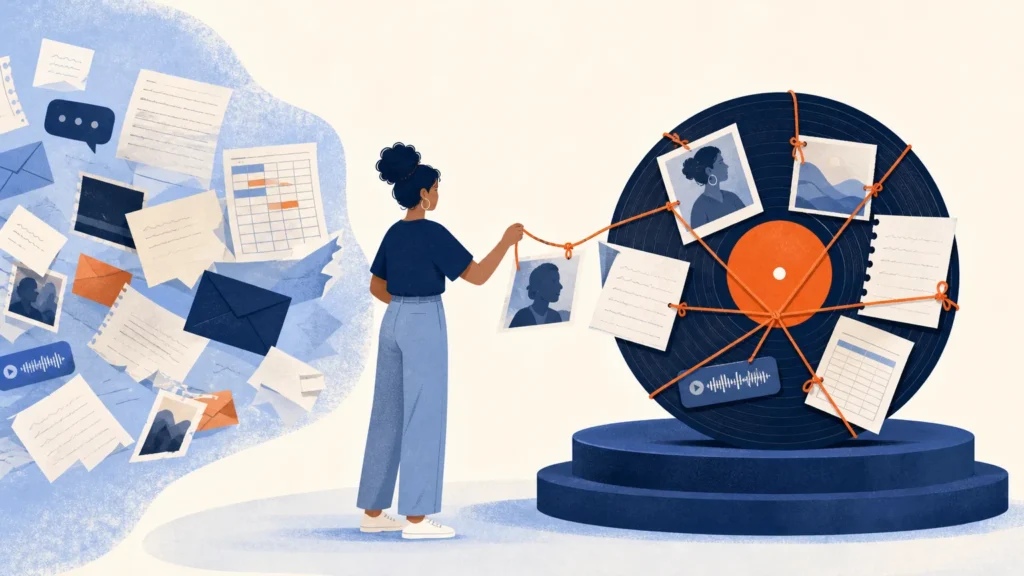
- Stop a later file from rewriting the credits: Set up a scheduled metadata agent that compares changed records against the approved credit sheet, keeping composition and recording credits apart. It drafts corrections with their sources and freezes a disputed split for a person to resolve.
- Turn listening notes into the next revision: Keep a listening queue that pairs each version with the artist's written direction, and track every note to resolution. Listeners judge the sound. The agent keeps versions, notes and follow-ups, and holds any request that contradicts the direction.
- Keep campaign drafts honest when the date moves: Keep a dated draft queue in which every draft cites the approved facts it uses. When a date, title or artwork changes, only the affected drafts get rebuilt, superseded versions are cleared without losing the history, and nothing is published.
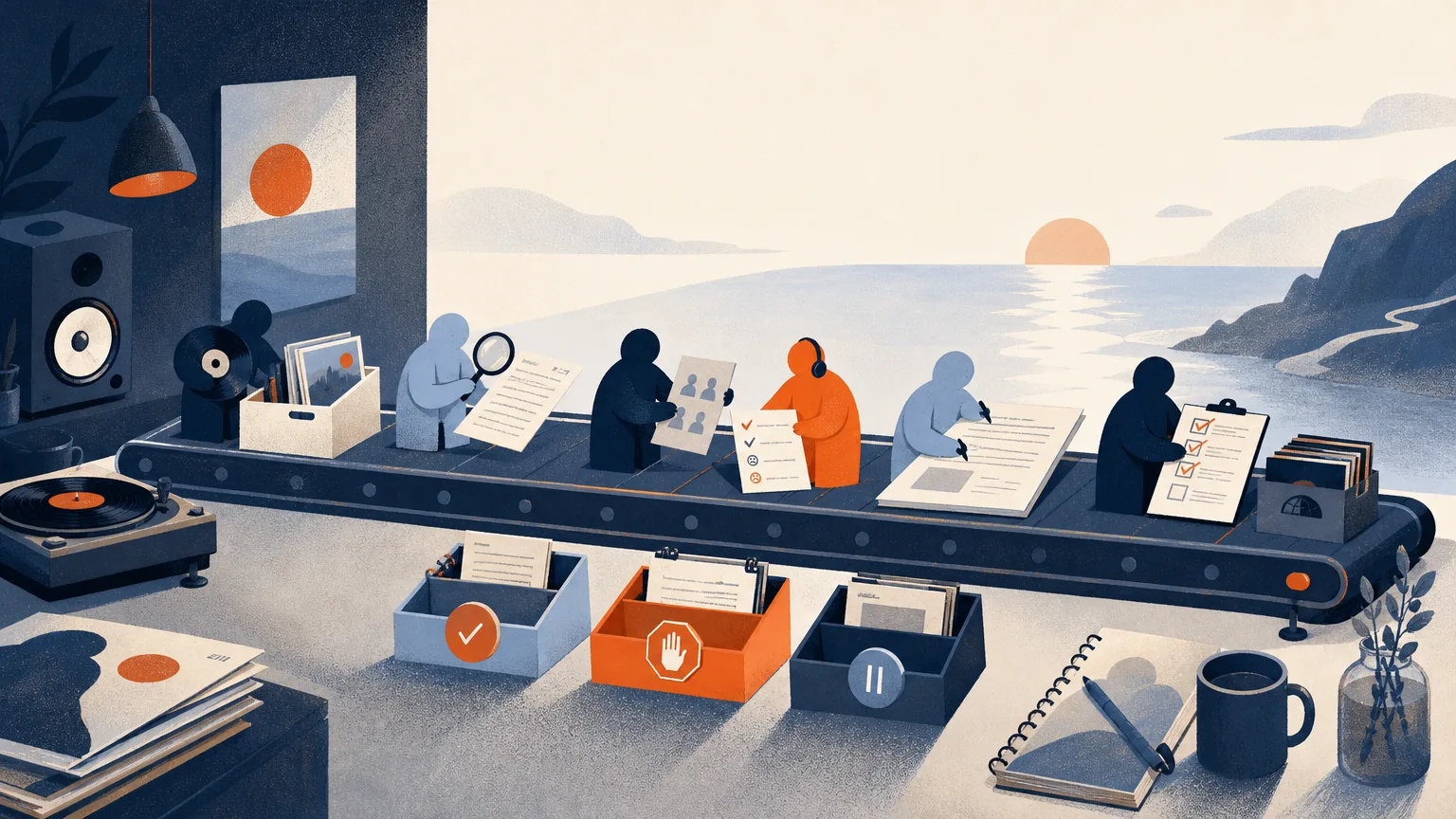
- Test the whole workflow before a real release depends on it: Run the combined workflow against duplicates, missing files, clashing credits, a moved date, a delayed approval and an interrupted run. Check that it pauses, recovers, submits nothing, and leaves a status report someone else can read.
Taught at learn.m-a-s-t-e-r.ai: lessons that adapt to your level, an AI tutor you can ask anything, quizzes and flashcards, and a certificate when you finish.